
Most Groodle owners will tell you the same thing: once you've had one, no other dog quite measures up. That curly coat, the gentle eyes, the boundless enthusiasm for absolutely everything. But underneath all that fluffy charm, Groodles carry a genetic inheritance from two parent breeds, the Golden Retriever and the Poodle, that comes with some well-documented health considerations.
Understanding what your Groodle is prone to isn't about worrying. It's about being the kind of owner who catches things early, asks the right questions at vet visits, and gives their dog the best possible shot at a long, comfortable life. The good news is that most of the common groodle health problems in Australia are manageable with the right knowledge and a proactive approach.
Are Groodles Generally Healthy Dogs?
Yes, and that reputation is well deserved. Groodles benefit from what breeders call hybrid vigour, meaning the genetic diversity from crossing two distinct breeds can reduce the expression of certain inherited conditions compared to purebred dogs. In practice, this often translates to slightly better overall health outcomes and fewer breed-specific extremes.
That said, hybrid vigour is not a health guarantee. Groodles still inherit predispositions from both the Golden Retriever and Poodle sides of the family tree. Golden Retrievers are known for joint and skin issues; Poodles bring genetic risks for eye conditions and certain metabolic disorders. A Groodle can inherit any combination of these, and responsible breeders screen for the most serious ones before breeding.
When bred and raised well, Groodles typically live between 12 and 15 years. Our detailed look at Groodle lifespan and what affects longevity covers the factors that matter most. The short version: genetics, nutrition, and how carefully you protect their joints in the first two years of life all play a significant role.
Hip and Elbow Dysplasia
Joint dysplasia is probably the most discussed health concern in Groodles, and for good reason. It affects the hip or elbow joints as they develop, causing abnormal fit between the ball and socket. Over time this leads to cartilage wear, inflammation, and in moderate to severe cases, chronic pain and reduced mobility.
The Golden Retriever parent is the primary contributor here. Golden Retrievers have historically high rates of hip dysplasia, and Groodles that inherit this predisposition can start showing signs as early as 12 to 18 months, though many cases only become clinically obvious in middle age when arthritis sets in.
Signs to watch for include a swaying or bunny-hopping gait when running, reluctance to climb stairs, stiffness after rest, and a noticeable change in how your dog carries its back end. Elbow dysplasia tends to show up as intermittent lameness in one or both front legs, often more obvious after exercise.
Mild cases are often managed conservatively: controlled exercise, weight management, and joint supplements. More severe cases may require surgical intervention. The most important thing you can do in the early months is avoid over-exercising Groodle puppies on hard surfaces and keep growth-phase body weight in check. Rapid weight gain during the first year puts real mechanical stress on joints that are still forming.
Skin Allergies and Sensitivities
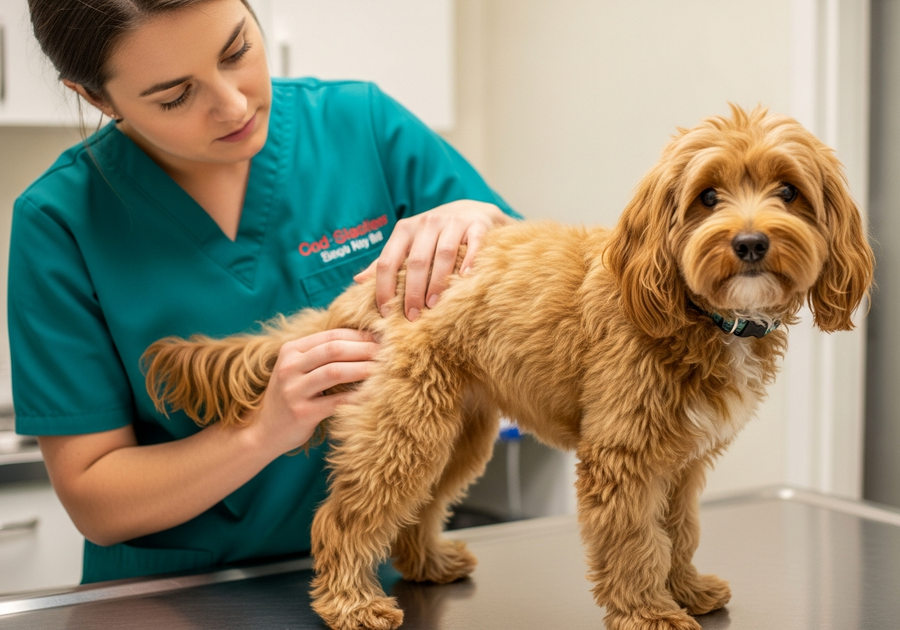
Skin problems are extremely common in Groodles, and they can be genuinely frustrating to manage because the triggers are varied and not always obvious. Environmental allergens like grass pollens, dust mites, and mould spores are frequent culprits, as are food proteins, particularly chicken, beef, and dairy.
What makes Groodle skin allergies tricky is the way they present. The most obvious sign, itching, is also one of the least specific symptoms in all of veterinary medicine. Your dog might lick their paws obsessively, rub their face along the carpet, scratch at their ears, or develop red, flaky patches on the belly or groin. Some Groodles develop recurrent hot spots, which are moist, inflamed skin lesions that appear quickly and spread if left untreated.
The Poodle side of the family contributes here too. Poodles are known for sensitive skin, and their low-shedding coats, which Groodles often inherit, can trap moisture and debris close to the skin if not regularly groomed.
If your Groodle is scratching frequently or developing recurrent skin issues, a systematic approach with your vet is more effective than trying over-the-counter remedies. Skin cytology, food elimination trials, and allergy testing can help identify the actual trigger rather than just managing symptoms indefinitely. Similar sensitivities appear in other popular designer crossbreeds, including those covered in our guide to common Cavoodle health problems.
Ear Infections
Groodles are prone to ear infections, and the anatomy is largely to blame. Those beautiful floppy ears create a warm, enclosed ear canal with limited airflow. Add in the dense, curly hair that often grows inside the ear canal (inherited from the Poodle parent), and you have ideal conditions for yeast and bacterial overgrowth.
Water makes this worse. After swimming or bathing, moisture trapped in the ear canal creates a breeding environment for organisms that cause otitis externa, the outer ear infection most commonly seen in this breed.
Classic signs are head shaking, scratching at one or both ears, a dark discharge or waxy build-up visible at the entrance to the canal, and a yeasty or sour smell. Some dogs become head-shy or yelp when you touch their ears. A normal, healthy ear should be pale pink, dry, and odourless.
Prevention is genuinely achievable with consistency. Weekly ear checks, drying ears thoroughly after water exposure, and having a vet trim the ear canal hair at grooming appointments all reduce infection frequency significantly. Chronic ear infections that keep coming back despite treatment are often driven by underlying allergies, so addressing the root cause matters more than repeated antibiotic courses.

Progressive Retinal Atrophy (PRA)
Progressive retinal atrophy is a genetic eye condition that causes gradual, irreversible deterioration of the photoreceptor cells in the retina. It is inherited from the Poodle lineage, and it can appear in Groodles if parent dogs have not been DNA tested before breeding.
PRA typically progresses slowly, often over years. The first sign many owners notice is difficulty seeing in low light, the dog seems hesitant at dusk or refuses to go down stairs in dim lighting. As it progresses, daytime vision is affected too. There is no treatment that reverses or halts PRA, but dogs adapt remarkably well to vision loss when their environment stays consistent.
The key prevention strategy is breeder-level testing. Responsible breeders screen parent dogs for PRA-causing gene variants using DNA tests before any breeding takes place. When you're choosing a Groodle puppy, asking to see PRA clearances for both parents is a completely reasonable request, and any breeder unwilling to provide them is worth reconsidering.
If you have an existing adult Groodle, annual eye examinations by a veterinary ophthalmologist can catch early changes and give you time to prepare your home and routines before vision loss progresses significantly.
Bloat (Gastric Dilatation-Volvulus)
Bloat, or gastric dilatation-volvulus (GDV), is a life-threatening emergency that primarily affects large, deep-chested dogs. Standard Groodles fall into this category, and this is one condition where speed of recognition genuinely determines survival.
GDV occurs when the stomach fills with gas and then twists on itself, cutting off blood supply to the stomach wall and sometimes the spleen. Without surgical intervention, the condition is fatal, typically within hours of onset.
The signs can escalate quickly: a visibly distended abdomen that feels hard or tight, repeated unproductive retching where the dog tries to vomit but produces nothing, restlessness, excessive drooling, and obvious distress. If you see these signs, don't wait. This is a call-the-emergency-vet-and-go situation, not a watch-and-see one.
Reducing risk involves feeding smaller, more frequent meals rather than one large daily feed, using a slow feeder bowl if your dog eats quickly, and avoiding vigorous exercise in the 90 minutes before and after eating. Some owners of high-risk breeds opt for a preventative gastropexy, a surgical procedure that tacks the stomach to the abdominal wall, at the time of desexing. It is worth discussing with your vet, particularly for standard-size Groodles.
Dental Disease
Dental disease is the most prevalent health condition in adult dogs across all breeds, and Groodles are no exception. By age three, the majority of dogs have some degree of periodontal disease if their teeth have never been brushed or professionally cleaned.
Mini and medium Groodles can have additional dental crowding due to the Poodle parent's compact jaw combined with a full set of teeth. Crowded teeth trap food and plaque more effectively, accelerating tartar build-up and gum inflammation.
The signs to watch for include bad breath (not just "dog breath" but genuinely foul breath), visible yellow or brown deposits on the teeth at the gumline, red or swollen gums, and reluctance to chew harder foods or toys. Severe periodontal disease causes tooth loss and chronic pain that dogs rarely show openly, which is why annual dental checks matter.
Daily brushing with a dog-safe toothpaste is the most effective prevention, and starting young makes it far less of a battle. If your Groodle is already resistant to brushing, dental chews, water additives, and professional cleans under anaesthesia are the practical alternatives your vet can advise on.
Other Conditions Worth Knowing
A few additional conditions appear with meaningful frequency in Groodles and their parent breeds.
Hypothyroidism, where the thyroid gland produces insufficient hormones, occurs in both Golden Retrievers and Poodles and can therefore appear in Groodles. Signs develop gradually and are easy to attribute to other causes: unexplained weight gain despite normal eating, lethargy, a dull coat, and skin changes. A simple blood test can confirm the diagnosis, and treatment with oral medication is highly effective and lifelong.
Subvalvular aortic stenosis (SAS), a narrowing just below the aortic valve, is inherited from the Golden Retriever side. Mild cases may go undetected for years; severe cases carry a risk of sudden cardiac death in young dogs. Annual auscultation during routine vet visits can identify suspicious heart murmurs that warrant further investigation with an echocardiogram.
Golden Retrievers also have an elevated lifetime cancer risk compared to many breeds, particularly haemangiosarcoma and lymphoma. While the hybrid cross reduces some risk, owners of older Groodles should be alert to unusual lumps, rapid weight loss, or persistent fatigue, and not dismiss these signs as simple ageing.
For additional context on inherited conditions from the Golden Retriever side of the family, the guide to common Golden Retriever health problems is worth reading alongside this one.
How to Keep Your Groodle Healthy
Routine vet care is the single most impactful thing you can do. Annual health checks for young adults, twice-yearly from age seven onwards, give your vet the opportunity to detect subtle changes in joint function, heart rhythm, dental health, and eye condition before they become serious problems. Groodles are excellent at masking discomfort, so external examination often catches what owners miss at home.
Nutrition matters more than most owners realise. A high-quality, age-appropriate diet that maintains lean body weight takes mechanical load off the joints, reduces the severity of skin inflammatory responses, and supports long-term organ health. Overweight Groodles develop joint problems earlier, recover more slowly from illness, and have shorter lifespans on average. It is worth asking your vet to body-condition score your dog at each visit.
Exercise needs to be appropriately calibrated. Adult Groodles need meaningful physical activity every day, typically 45 to 90 minutes depending on size. Puppies under 12 months should follow the five-minutes-per-month-of-age rule per session to avoid joint overload during the growth phase. Older Groodles with known joint changes benefit more from regular moderate exercise like swimming or leash walking than from high-impact activities.
Finally, choose your breeder carefully. The most preventable groodle health problems in Australia are the inherited ones, and they are preventable primarily at the breeding stage. Responsible breeders hip-score both parents, DNA test for PRA, and cardiac screen for SAS before producing a litter. Asking for documented health clearances is not unreasonable; it's the single biggest variable you can influence before your puppy even comes home. For a broader view of how Hero approaches dog health across breeds and life stages, visit Hero Pet Health.
Not sure which health issues to watch most closely for your Groodle? Our free Dog Health Assessment takes just a few minutes and gives you a personalised action plan based on your dog's age, breed, and current health.
The Bottom Line
Groodles are wonderful dogs, and the majority live long, healthy, uncomplicated lives when given proper care. The conditions covered here are common in the breed, but common doesn't mean inevitable. Hip screening, PRA testing, ear care routines, dental hygiene, and weight management are all practical interventions that genuinely shift the odds in your favour.
The owners who get the best outcomes are those who understand their dog's specific risks before problems arise, build a strong relationship with a vet they trust, and act on early warning signs rather than waiting for things to become obvious. Owners of similarly active, large-breed crossbreeds will find useful parallels in our guide to common Labrador Retriever health problems. That's exactly the kind of owner a Groodle deserves.