

If you share your home with a Labrador, you already know how much they live for your company. They follow you room to room, greet you at the door like you've been gone for a year, and sleep better when they can feel you nearby. That devotion is part of what makes Labs so loved. It's also what makes them one of the dog breeds most likely to struggle when life gets stressful.
Separation anxiety, thunderstorm phobia, and general nervousness are genuine concerns for many Lab owners in Australia. The good news is that daily calming supplements can play a meaningful role in helping your dog manage those moments more comfortably. This guide covers what to look for, which ingredients are worth understanding, and how to set your Lab up for a calmer day-to-day life.
Why Labradors Are More Prone to Anxiety
Labs were bred to work closely alongside humans as retrievers and assistance dogs. That bond is hardwired. Their emotional attunement to people is a strength, but it also means they can struggle more than some other breeds when routines change, when they're left alone, or when something unpredictable happens in their environment.
Research published by Country Living in 2021 found that Labrador Retrievers ranked at the top of a list of breeds most likely to exhibit separation anxiety. A broader estimate from the Institute for Environmental Research and Education suggests that between 20% and 40% of all dogs experience some form of separation anxiety, and people-centred breeds like Labs tend to sit at the higher end of that range.
It's worth noting that anxiety in Labs doesn't always look the same. Some dogs are vocal. Some become destructive. Others shut down or stop eating. Understanding how your specific dog expresses stress is the first step toward addressing it well. If you're not sure what to look for, our guide to reading your dog's anxiety signals breaks down the signs by type and severity.
Signs Your Labrador Is Struggling With Anxiety
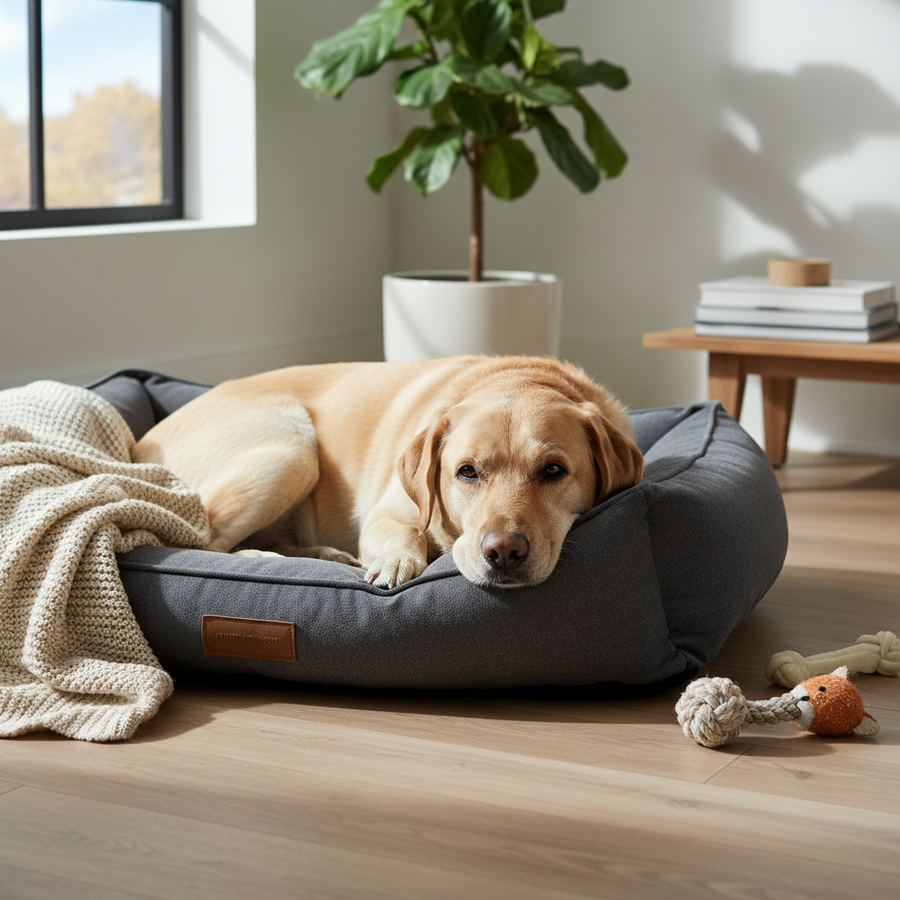
Anxiety in Labradors shows up in both everyday situations and specific high-stress moments. Knowing the difference helps you respond appropriately.
Separation Anxiety
Separation anxiety is the most commonly reported anxiety type in Labs. Signs tend to appear within the first 30 minutes of an owner leaving and may include excessive barking or howling, destructive behaviour (especially around doors and windows), toileting inside despite being house-trained, pacing or restlessness, and excessive salivation.
Some Labs also show distress signals before you even leave, such as following you anxiously as you prepare to go out, or refusing to settle if they sense a change in your routine. For more on managing this specific pattern, our article on natural supplements for separation anxiety covers both short-term and long-term strategies.
Situational Anxiety
Some Labs are perfectly relaxed at home but become stressed in specific situations: thunderstorms, fireworks, car travel, vet visits, or loud environments. This is sometimes called noise phobia or situational anxiety, and it can appear even in dogs who are otherwise well-settled.
For Labs with weather-related anxiety, our guide on helping dogs through thunderstorms and fireworks covers both management strategies and supplement support.
What to Look for in a Calming Supplement for Labradors
Not all calming supplements work the same way. The best formulas use a combination of ingredients that support your dog's nervous system from several angles at once, rather than relying on a single compound to do all the work. Here are the ingredients most worth understanding when choosing a supplement for your Lab.
Magnesium
Magnesium supports over 300 enzymatic processes in the body, including those that regulate the nervous system. In dogs, adequate magnesium levels are associated with a more measured stress response. When magnesium is low, the nervous system can become hyperreactive, which makes stressful events feel more overwhelming. A supplement that includes magnesium works on the foundation of calm, not just the surface of it.
L-Tryptophan
L-Tryptophan is an essential amino acid and a precursor to serotonin, the neurotransmitter most closely associated with mood regulation and emotional balance. Rather than acting as a quick-acting relaxant, L-tryptophan supports the body's own serotonin production pathways. The result, with consistent daily use, is a dog that feels more regulated, not drowsy.
Ashwagandha
Ashwagandha is a well-researched adaptogen, meaning it helps the body adapt to stress rather than simply suppressing a stress response. Research featured by Wholistic Matters notes that adaptogenic herbs like ashwagandha have known calming effects relevant to anxiety and stress management in animals. It works best as part of a daily routine rather than as a quick fix.
Chamomile
Chamomile has a long history of use for supporting relaxation in both humans and animals. It contains compounds believed to interact with the nervous system in ways that promote a sense of calm. In supplement form, chamomile is typically paired with other calming ingredients for a more complete effect.
Vitamin B1 (Thiamine)
Thiamine plays a direct role in healthy nervous system function. Dogs that are deficient in B1 can become more reactive and stressed. Including it in a calming formula ensures the nervous system has the nutritional building blocks it needs to function well under pressure.
Jerusalem Artichoke
Jerusalem Artichoke is included in calming supplements for a less obvious but genuinely useful reason: it supports the gut-brain axis. The gut and brain are connected via the vagus nerve, and gut health has a measurable influence on mood and anxiety levels. Jerusalem Artichoke acts as a prebiotic, feeding the beneficial bacteria that help maintain that gut-brain balance.
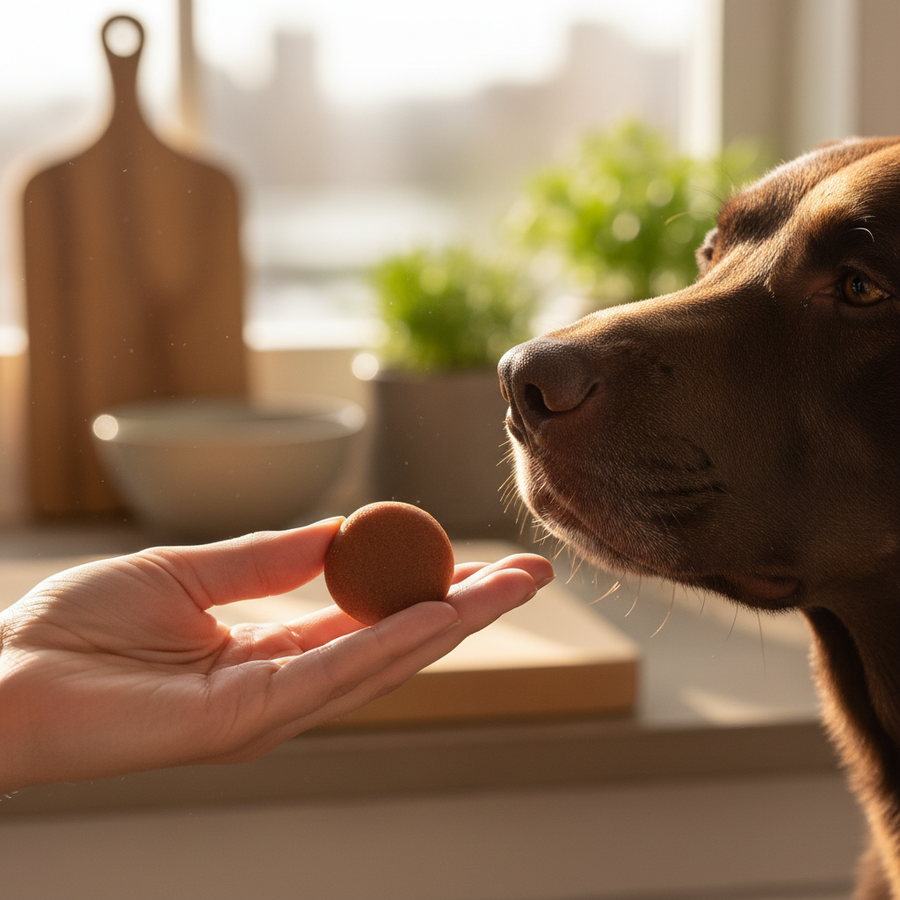
Hero's Calming Daily Chews: What's Inside
Hero's Calming Daily Chews are formulated with all six of the ingredients covered above: Magnesium, L-Tryptophan, Vitamin B1, Jerusalem Artichoke, Ashwagandha, and Chamomile. Each ingredient is included at a level designed to support daily nervous system function, not just take the edge off in a crisis moment.
The chews are made in Australia, vet reviewed, and come as soft chews, making them easy to give to most Labs who tend to eat anything offered to them. The format matters: daily supplementation is more effective than sporadic use because it allows the ingredients to build up and support a stable baseline of calm. If you're deciding between a daily versus as-needed approach, our article on daily vs as-needed calming supplements outlines when each strategy is appropriate.
For Labradors with significant anxiety, calming supplements work best as one part of a broader support plan, alongside training, routine, and environmental management. They are not a substitute for veterinary advice when anxiety is severe.
If you'd like to explore Hero's Calming Daily Chews for your Lab, you can find full details on the calming chews product page.
Daily Supplementation: Building a Calming Foundation
One of the most common mistakes Lab owners make with calming supplements is treating them like an emergency tool. You notice a thunderstorm on the forecast, you reach for the supplements. The problem is that most calming ingredients, especially adaptogenic herbs and amino acid precursors like L-tryptophan, need time to build up and take effect.
Consistency is what delivers results. A Lab that receives calming supplements daily for several weeks has better nervous system support across the board, whether the day holds a thunderstorm, a vet visit, or just a long afternoon alone at home. Think of it as building a calming foundation, not just reacting to individual stressors.
That said, routine alone isn't enough for Labs with moderate to severe anxiety. Supplementation works best alongside behavioural support, which might include desensitisation exercises for separation anxiety, safe quiet spaces during storms, or working with a trainer experienced in anxiety management. Our broader dog anxiety resource hub covers all of these approaches together.
Supporting Your Lab's Calm Beyond Supplements
Calming supplements are a valuable tool, but they work better alongside consistent environmental and behavioural strategies. Here are a few that tend to make the biggest difference for Labs specifically.
- Predictable daily routine: Labs thrive on routine. Feeding, walking, and settle time at consistent hours reduces background stress significantly.
- Physical exercise: A tired Lab is a calmer Lab. Daily exercise that's appropriate for your dog's age and health burns off excess energy that can otherwise fuel anxious behaviour.
- Mental enrichment: Sniff games, puzzle feeders, and training sessions give Labs an outlet for their intelligence and reduce boredom-driven anxiety.
- Safe spaces: A crate or quiet room your Lab associates with rest, not punishment, gives them somewhere to self-regulate when things feel overwhelming.
- Gradual exposure: For separation anxiety specifically, short practice absences, starting with seconds and building over weeks, can help your Lab learn that you always return.
When to Talk to Your Vet
Calming supplements are appropriate for mild to moderate everyday anxiety. They are not a substitute for professional veterinary guidance when anxiety is affecting your Lab's quality of life significantly.
Consider booking a vet consultation if your Lab is injuring themselves or your home in their anxiety response, if anxiety has appeared suddenly without an obvious trigger, if they are refusing food or losing weight, or if they're showing signs of fear aggression. A vet or veterinary behaviourist can assess whether prescription medication, a behavioural referral, or a combination approach is the right next step.
Supplements and veterinary care are not mutually exclusive. Many Labs benefit from both, with supplements supporting daily baseline calm while more targeted interventions address specific triggers.
For a broader look at calming options, including how Hero's formulation compares across dog types, see our complete guide to the best calming treats for dogs in 2026.